


Clinical Laboratory
|
There is a hierarchy in a clinical laboratory. Phlebotomists (PBT) perform blood specimen collection. Medical Laboratory Assistants or Aides (MLA) focus on specimen receipt, preparation, and simple testing, which frees up Medical Laboratory Technicians (MLT) to perform routine, usually larger volume testing. The Medical Laboratory Scientists (MLS)and Medical Laboratory Specialists (MLSp) are then able to perform advanced test procedures and interpret diagnostic test results. The Doctorate in Clinical Laboratory Science provides consultation services as the liaison between the clinical laboratory and professionals treating the patient. The Pathologist is responsible for a patient’s diagnosis. Each position relies on the other positions in the laboratory to provide quality results and optimal patient outcomes.
|

|
Anatomic Laboratory
|
There are two main medical specialties within anatomic pathology:
|

|
Public Health Laboratory
|
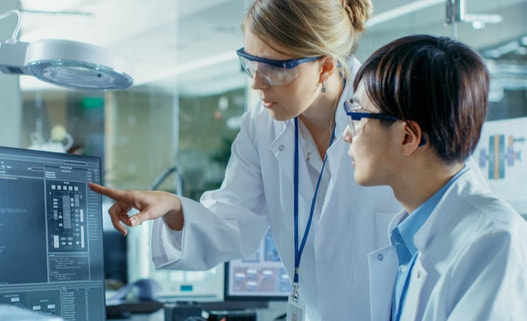
Public health focuses on the well-being of a community. Professionals who work in a public health laboratory are the first level of response when it comes to questions about the safety of the environment and people around you.
|
|
Industry
|
Laboratory industry partners provide support to laboratories related to scientific instruments, testing methods, and installation and training on these products so that laboratories can provide quality test results.
|

|
Research
|
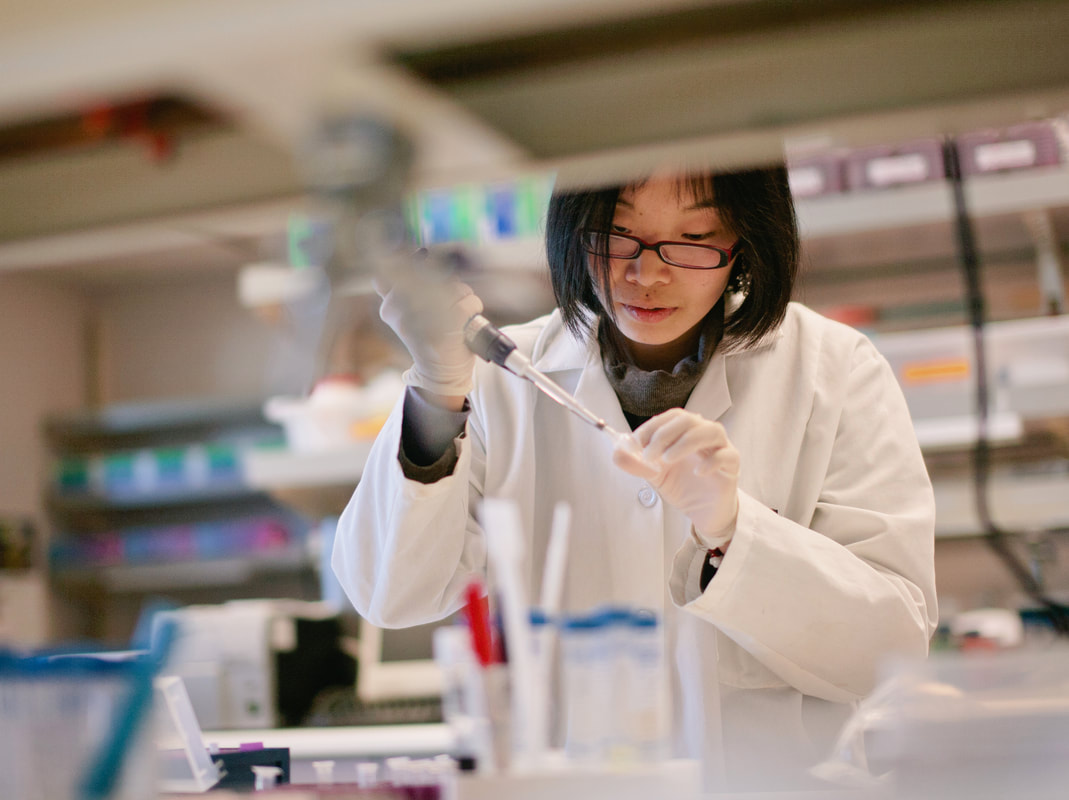
Research laboratories are workplaces that specialize in scientific research, such as applying new laboratory methods for detecting analytes, or formulating new antibiotics. There are three research laboratory sectors: academic laboratories, government laboratories, such as the National Institutes of Health, and private sector laboratories, such as pharmaceutical companies.
|
|
Education
|
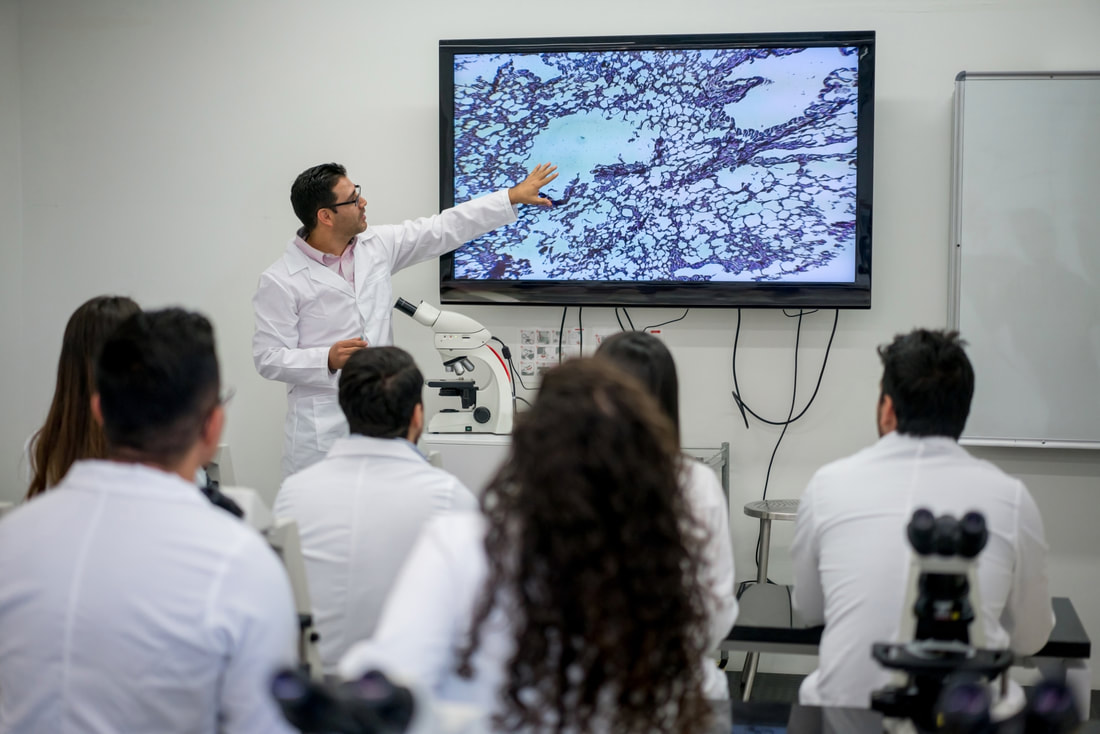
Laboratory educators ensure the education and training of the next generation of laboratory professionals. In carrying out of this mission, they identify trends and strategies in laboratory medicine, enhance their teaching skills, and develop innovative ways to teach students.
|
|
Medical Laboratory Scientists (MLS) are vital healthcare detectives, uncovering and providing laboratory information from routine to complex laboratory testing that assists doctors in patient diagnosis and treatment, as well as in disease monitoring or prevention. Examples of routine laboratory testing include hematology, chemistry, and microbiology. Examples of complex laboratory testing include molecular diagnostics, flow cytometry, and toxicology. As a Medical Laboratory Scientist, you will be responsible for performing tests to analyze blood and other body fluids, tissue, and other substances, interpreting the results, and generating accurate reports. You will operate and troubleshoot sophisticated laboratory equipment and use state-of-the-art technology to determine if a person is having a heart attack, has diabetes or cancer, or has an infection caused by bacteria or viruses. You may be involved in other aspects of the laboratory including supervision, assuring quality, safety, process improvement, or as a member of a clinical care team. You may work in a hospital or clinic laboratory, but your education and experience prepares you for positions in laboratory information system (LIS), infection control, public health, research, and industry. A baccalaureate degree, specialized training in an approved program for medical laboratory science, and national certification as a MLS is required to become a Medical Laboratory Scientist.
Medical Laboratory Specialists (MLSp) have the same responsibilities as the MLS, but have increased knowledge and skills in one specialty area, such as microbiology, hematology, blood bank, or chemistry. MLSp are more likely to work in complex laboratory settings, including molecular diagnostics, flow cytometry, cytogenetics, toxicology, clinical immunology and immunogenetics, and endocrinology. You may be involved with hospital-wide committees such as Infection Control, Patient Safety, Pharmacy & Therapeutics, or Blood Product Utilization. A baccalaureate degree, specialized training, additional experience in a specialty, and national certification as a Specialist is required to become a Medical Laboratory Specialist.
Medical Laboratory Technicians (MLT) are vital healthcare detectives, uncovering and providing laboratory information from routine laboratory testing that assist doctors in patient diagnosis and treatment, as well as in disease monitoring or prevention. As a Medical Laboratory Technician, you will be responsible for performing tests on blood and other body fluids, either using manual methods or highly sophisticated laboratory equipment, usually under the supervision of a pathologist or medical laboratory scientist. The test results you generate will help determine if a person is having a heart attack or has diabetes or cancer. You will most likely work in a hospital laboratory or in a doctor’s office clinic, although you may work in public health, research, and reference laboratories. An associate degree, specialized training in an approved program for medical laboratory technicians, and national certification as a MLT is required to become a Medical Laboratory Technician.
Medical Laboratory Assistants or Aides (MLA) are the helpers in the laboratory. As a Medical Laboratory Assistant, you are responsible for receiving and preparing specimens for laboratory testing. You may be called upon to perform simple diagnostic tests under supervision, and ensure that the laboratory is stocked with necessary supplies, under the supervision of a Medical Laboratory Scientist. Youwill most likely work in a hospital laboratory, although you may work in public health, research, and reference laboratories. Some employers train their own MLAs, and there are formal training programs available in vocational or community colleges.
Phlebotomists (PBT) are the face of the laboratory, as you may be the only laboratory professional the patient sees. As a Phlebotomist, you are responsible for properly drawing blood from patients and delivering the samples to the laboratory for testing, usually under the supervision of a Medical Laboratory Scientist. You will have opportunities to meet new people daily and, depending on your setting, may draw blood from people of all ages, from babies and children to adults and elderly patients. You will most likely work in a hospital laboratory, although you may work at drawing stations for reference laboratories. Some employers train their own PBTs, and there are formal training programs available in vocational or community colleges.
Professionals who obtain a Doctorate in Clinical Laboratory Science (DCLS) provide advanced laboratory practice. As a DCLS, you will be responsible for providing consultative services and laboratory expertise to physicians, nurses, patients, and the public. You may participate directly in patient care decisions as part of a patient care team by providing accurate and appropriate laboratory information, and having a positive effect on patient outcomes. You will most likely work in a hospital laboratory, although your expertise prepares you for many roles. A Doctorate in Clinical Laboratory Science, which includes specialized laboratory training, and national certification is required to be a DCLS.
A Laboratory Information System (LIS) Specialist not only provides computer support for the laboratory, but also helps manage the laboratory information system. As a LIS Specialist, you would be responsible for ensuring that laboratory tests are properly built into the system for accurate recording and reporting of results, including electronic transfer of data. You may be asked to train staff on the LIS, assist with technology related needs, and troubleshoot computer problems. You may be involved in working with facility Health Information System (HIS) and Electronic Health Record (EHR) leaders or contractors to ensure a highly functioning LIS. An associate or baccalaureate degree to include specific science or information technology courses is usually required to be a LIS Specialist.
Providing quality testing is a major priority for any laboratory. As a Quality Assurance Officer, your main duty is to ensure a high standard of quality testing. You will have the responsibility to ensure that the laboratory maintains compliance with the many regulatory agencies that allow the laboratory to operate. You may act as an auditor to conduct internal audits within the laboratory or may audit other facilities. You may also be responsible for maintaining the laboratory’s quality management system, which includes writing policies and procedures and monitoring quality improvements. A baccalaureate or master’s degree is usually required to be a Quality Assurance Officer.
Cytotechnology is the study of cells. As a Cytotechnologist (CT), you will be responsible for microscopic interpretation of Pap smears and assessment of what are normal and abnormal cells by analyzing cellular patterns and changes noted in both the nucleus and cytoplasm of cells. You will also interpret specimens from other sites, such as the lung, bladder, body cavities, central nervous system, gastrointestinal tract, liver, lymph nodes, thyroid, salivary glands, and breast to assist in diagnosing cancer and non-cancerous diseases. A baccalaureate degree, specialized training in an approved program for cytotechnology, and national certification as a CT is required to become a Cytotechnologist.
Histology is the study of cellular morphology, tissue anatomy, and tissue structure. As a Histotechnician (HT), you are responsible for the process of preparing human tissues so that they may be observed by different forms of microscopy to diagnose or rule out disease. You will work with stains, tissue embedding materials, and manual and automated equipment to allow human specimens to be viewed under the microscope. An associate degree, specialized training in an accredited Histotechnician program, and national certification as an HT is required to become a Histotechnician.
Histology is the study of cellular morphology, tissue anatomy, and tissue structure. As a Histotechnologist (HTL), you are responsible for routine and specialized procedures to prepare human tissues so that they may be observed by different forms of microscopy to diagnose or rule out disease. You will work with routine stains, tissue embedding materials, and equipment to prepare human specimens to be viewed under the microscope. Additionally, with specialized training, you are able to perform complex immunological, molecular, and electron microscopy techniques that further assist with specific disease diagnosis. A baccalaureate degree, specialized training in an accredited Histotechnologist program, and national certification as an HTL is required to become a Histotechnologist.
As a Pathologists’ Assistant (PA), you will work under the direction and supervision of a pathologist to describe and dissect tissues from an autopsy, needle biopsy, or surgical procedures to prepare them for analysis. You will be responsible to determine the best area of the tissue specimen to dissect and prepare for microscopic evaluation to diagnose or rule out disease. A baccalaureate or master’s degree to include specific science courses, a clinical internship in an accredited Pathologists’ Assistant program, and a fellowship exam are required to become a Pathologists’ Assistant.
Pathologists are medical doctors who specialize in clinical and anatomic laboratory medicine. As a Pathologist, you are responsible for the interpretation of complicated laboratory testing and the diagnosis of patients, whether it be a diagnosis of cancer or a blood clotting disease, or performing an autopsy to determine a cause of death. A Medical Degree, specialized training and a national certification is required to become a Pathologist.
Public health focuses on the well-being of a community. Professionals who work in a public health laboratory are the first level of response when it comes to questions about the safety of the environment and people around you. As a Public Health Laboratory Scientist (PHLS), you test human specimens and/or environmental samples and acquire and interpret data for public health decision making. You may work with sophisticated instruments, identify pathogens or environmental contaminants, or screen newborn specimens for potential health-threatening disorders. A baccalaureate or master’s degree to include specific science courses is required to be a public health laboratory scientist.
As a Public Health Technician (PHT), you may test blood and other human specimens, food, water, soil, fish, paint, and many other liquids and solids that could harm people or the environment. Through testing, which may be performed on sophisticated instruments, you will determine if there is evidence of a pathogen or contaminant. An associate degree to include specific science courses is required to be a Public Health Laboratory Technician.
There is always a threat for terrorism in any state and the public health laboratory would be of vital importance if there was an attack. Not only is it important for the laboratory to be prepared for a terrorist event, but also for natural disasters. As an Emergency Response Coordinator, you would act as the liaison to emergency personnel and other medical facilities. You would conduct preparedness training for emergency personnel, medical facilities, and laboratory staff, and represent the public health laboratory at various emergency response events. You would also coordinate preparedness drills to assess response in various situations and write policies, procedures, and grants. A baccalaureate or master’s degree to include specific science courses is required to be an Emergency Response Coordinator.
A Public Health Laboratory Training Coordinator not only trains staff in laboratory skills, but also assists with training the public health laboratory’s partners. As a Training Coordinator, you may assist in emergency response drills and provide important information to hospitals, clinics, local public health agencies, and local fire and police departments on how to proceed with sample submission. You may be responsible for conducting new employee training, and assuring the availability of training resources for staff, and will work closely with all areas of the laboratory by providing guidance on training documentation. A baccalaureate or master’s degree to include specific science courses is required to be a Public Health Laboratory Training Coordinator.
A Public Health Laboratory Safety Officer has many duties. You would be responsible for the safety of all laboratory staff, and for staying current on new rules and regulations dealing with safety. You will help minimize exposure of harmful agents that are found in the laboratory where biological, chemical, and radioactive samples are handled on a daily basis. You will be responsible for organizing or conducting risk assessments. You may conduct training seminars for staff on new safety procedures and educate local and state emergency personnel on laboratory safety and hazards. A baccalaureate or master’s degree to include specific science courses is required to be a Public Health Laboratory Safety Officer.
A Field Service Engineer services, repairs, and installs scientific instruments. As a field service engineer, you would troubleshoot problems, and perform preventive maintenance or service on highly sophisticated instruments, following manufacturer’s specifications. You will write full service reports and complete all paperwork associated with each service call. You will be expected to maintain current knowledge and communicate relevant feedback regarding equipment performance. An associate or baccalaureate degree and specialized training is required to be a Field Service Engineer.
A Technical and Training Specialist provides technical support for their company’s products. As a technical and training specialist, you would be expected to train others on the technology and troubleshoot when problems with the products arise. You may be asked to develop and implement innovative solutions and must maintain a high level of knowledge about your products. A baccalaureate degree and specialized training is required to be a Technical and Training Specialist.
Marketing is the development of ideas to reach people and sell products, and sales is the actual implementation and use of those ideas to sell the product. As a Sales or Marketing Manager, you will coordinate and lead sales and marketing efforts for your company and develop relationships with key customers to better understand their wants and needs. You will be expected to establish goals and monitor your progress towards meeting those goals. A baccalaureate degree is required to be a Sales or Marketing Manager.
A Research Scientist/Biotechnologist works to gather knowledge and understanding, usually in an academic setting or for private research companies or government agencies. As a Research Scientist, you would conduct research in a particular field of knowledge, develop and design work, perform experiments, make observations, and publish findings for peer review in professional journals. A baccalaureate, master’s, or doctorate degree in a particular field of study is required to be a Research Scientist/Biotechnologist.
A Program Director is the administrator of the professional program and responsible for making certain the program meets national standards for accreditation. As a Program Director, you will be evaluating academic coursework, hiring and supervising program faculty and staff, budgeting, and representing the program to your academic institution. You may also be responsible for teaching and lecturing students as well as advising and mentoring them. You may perform research and publish your findings and must keep up with advancements in your academic field and education. A master’s or doctorate degree is required to be a Program Director.
A Professor teaches and mentors students in their post-secondary education. As a Professor, you will not only be lecturing and teaching students in the classroom, but you may work with them to develop research and scientific papers. You may also be performing your own research and publishing scientific manuscripts. You will serve as an advisor and mentor to students in the field and ensure that you maintain competence in advancements in your academic field and education. An advanced degree, usually a doctorate degree, in your field or a related scientific field is required to be a Professor.
An Instructor teaches students in their post-secondary education. As an instructor, you will prepare lectures, exercises, and laboratory experiments, as well as lecture and teach students in the classroom. You will grade exams and papers and advise students. You will be expected to maintain competence in advancements in your academic field and education. A master’s or doctorate degree in your field or a related scientific field is required to be an Instructor.
Sponsored by © Coordinating Council on the Clinical Laboratory Workforce
